Finding My IT
I’ve spent a lot of time trying to figure out my purpose. Lately, writing has started to feel like an answer. A personal reflection on this new season and releasing Find Your IT.
October 2026 · A new season
A personal reflection on writing, purpose, and releasing Find Your IT.
8 minute read · Includes Chapter 3
Happy
New Day.
I’m ready for this season.
I’ve spent a lot of time trying to figure out my purpose. Lately, writing has started to feel like an answer.
I want to share a little of where I am right now. I’m in a period of career transition, and I know the direction I’m working toward. Understanding what feels meaningful to me has taken longer. That’s something I’ve been thinking about for a while, even when I haven’t known how to explain it.
There was a point when I didn’t want to release Find Your IT. I was still working through questions about my own purpose, and that made it difficult to put the book out. I didn’t feel settled in what I was going through.
Now that it’s released, I feel more comfortable saying that writing and being an author is my “it.” I enjoy having a place to share my thoughts. I enjoy taking something that matters to me and giving it enough attention to become a story someone else can spend time with.
I’ve done a lot of searching for what that feeling might be. Meanwhile, I was already writing. I was already creating and sharing pieces of myself. I’m starting to recognize how much that means to me.
And I want to keep doing it. I want to help people through what I share, while allowing myself to be myself. I can tell you what I’m thinking, what I’m learning, or what I’m still trying to understand. You get to decide what stays with you.
A story I’m grateful to share
Find Your IT began with a story Uncle Carl told me at a community feeding for people experiencing homelessness hosted by my stepfather, T.W. We were gathered there, giving to people in need. Out of the stories he shared, this one stayed with me, and I began to write.
I wanted to acknowledge that because people should know where the inspiration came from. Uncle Carl is someone I look up to for who he is in the community and what he gives to the people around him. I’m grateful he shared his story with me.
As I developed the book, I wanted young readers to have space to think about what interests them and what they might want to try. Kadyn’s experiences with Mr. New Day give him opportunities to be curious, get frustrated, make an effort, and learn about himself.
To me, finding your “it” means paying attention to what matters enough to you to explore. You may notice it in something you enjoy making, a problem you want to understand, or a way you like helping people. It can take time to recognize.
I hope a young reader enjoys the story and feels encouraged to try something without needing to be good at it right away. I hope the adults reading along listen to what catches their attention. Sometimes a question about a story gives a child a way to tell you something about themselves.
I’m ready for this season
For me, the next part is giving writing the time and care I want to give it. I want to keep sharing my thoughts and learning how to tell the stories I have to tell.
I know there will be lows. There will be days when I question myself or feel disappointed with how something turns out. I’m ready to work through that. I want to give myself the chance to see where this goes.
I feel like I’m finally setting foot in my “it.” There’s still plenty I’m figuring out, but being an author feels right to me. I’m glad I released the book, and I’m glad I get to share this part of my life with you.
If you’re reading this while figuring out something of your own, I hope you give yourself some time. Pay attention to what you enjoy and what you want to return to. You may already be doing something that deserves more of your attention.
What have you been wanting to give more time to?
Happy New Day.
From the world,
DaQuan
I wanted to leave you with a chapter from Find Your IT.
A chapter from Find Your IT
Chapter 3
Room 1: The Curiosity Room
The room didn’t look like a classroom, and that was the first thing Kadyn noticed.
There were no desks lined up in rows, no whiteboard waiting at the front, no posters reminding him what he was supposed to learn. Instead, the space felt open and unfinished, like it was meant to be moved through instead of sat in. Light poured in from high windows, and the air carried that quiet hum you feel right before something starts.
Three tables were spread across the room, each holding something different.
Kadyn stopped just inside the doorway, his backpack still hanging from one shoulder. He felt the same way he did when he opened a new app or flipped to the first page of a book he wasn’t sure about yet—interested, but cautious.
“This is… it?” he asked.
Mr. New Day nodded. “This is the first room.”
Kadyn looked around again, waiting for more. When nothing came, he frowned. “You’re not going to explain what I’m supposed to do?”
Mr. New Day smiled slightly. “Not right away.”
Kadyn didn’t like that answer, but something about the room made him step forward anyway.
The first table was covered in loose pieces—blocks, connectors, shapes that didn’t immediately look like they belonged together. Some were smooth and cool to the touch, others rough along the edges. There were no instructions, no pictures showing what the final product should look like.
Kadyn picked one up and turned it over in his hands. It felt solid. Possible.
“So I just… build something?” he asked.
“You can,” Mr. New Day said. “Or you can decide not to.”
“That’s not very helpful,” Kadyn muttered, but he stacked two pieces together anyway.
At first, the structure stood. Then it leaned. Then it collapsed.
Kadyn sighed, but instead of walking away, he adjusted the base and tried again. This time he added a different piece, just to see what would happen. The shape came out uneven, nothing like what he had imagined in his head, but he found himself tilting it, turning it, testing how it balanced.
He realized something then—he wasn’t frustrated. He wasn’t even thinking about whether he was doing it “right.” He just wanted to see what would happen next.
After a moment, he set the piece down and stepped back, like he didn’t want to get stuck there too long.
The second table held a flat board etched with symbols and patterns. Lines crossed and repeated in ways that didn’t make sense at first glance. A small stack of cards sat beside it.
Kadyn picked one up and read aloud. “Step one: Identify what repeats.”
“That’s it?” he asked.
“There are more,” Mr. New Day said. “If you need them.”
Kadyn leaned over the board, squinting. At first, he guessed. That didn’t work. Then he tried moving the board, flipping it, even tracing the symbols with his finger. Still nothing.
He felt a flicker of annoyance rise in his chest, but instead of stepping away, he paused. Looked again. Slower this time.
That’s when he noticed it—one shape showing up every third space.
“Oh,” he said quietly.
He followed the pattern forward, then backward, testing it. The next step wasn’t written anywhere, but he tried it anyway.
It worked.
Kadyn felt a small rush spread through him, warm and quick. He didn’t finish the whole puzzle. He didn’t need to. What mattered was the moment when confusion turned into understanding, when his brain leaned forward instead of pulling back.
He stepped away from the table with a small smile, like he’d figured out something private.
The third table looked the most ordinary. Just thin booklets and diagrams stacked neatly, nothing that stood out at first.
Kadyn picked one up anyway.
“What’s this about?” he asked.
Mr. New Day glanced over. “You tell me.”
Kadyn skimmed the first page. Then slowed down. The words led to diagrams, the diagrams led to questions, and the questions made him flip the page.
He didn’t realize how long he’d been standing there until Mr. New Day cleared his throat gently.
Kadyn looked up. “What?”
Mr. New Day nodded toward the clock.
Kadyn followed his gaze and blinked. “Oh.”
He hadn’t meant to stay that long. It hadn’t felt long. His shoulders were relaxed, his mind steady, like he’d slipped into a quiet tunnel without noticing.
He set the booklet down carefully, like it might still be waiting for him later.
Kadyn stepped back and looked at all three tables.
None of them felt finished. None of them felt perfect. But one of them had pulled him in deeper than the others, without asking permission.
Mr. New Day stood beside him now. “Which one did you go back to?” he asked.
Kadyn hesitated. “I didn’t mean to,” he said. “I wasn’t trying to choose.”
Mr. New Day nodded. “That’s usually how curiosity works. It doesn’t announce itself. It just keeps you company.”
Kadyn looked at the table again. “So… is this my IT?”
“Not yet,” Mr. New Day said. “But it’s a clue.”
“A clue to what?”
“To what holds your attention before you’re worried about being good at it,” Mr. New Day said. “To what makes effort feel lighter.”
The bell rang, short and sharp.
The door on the far side of the room opened.
Kadyn took one last look at the tables. He didn’t know what his IT was yet. But now he knew what curiosity felt like—and he had a feeling he’d recognize it again when it showed up.
Spend a little time with Kadyn.
Explore Find Your IT at DQ Writes →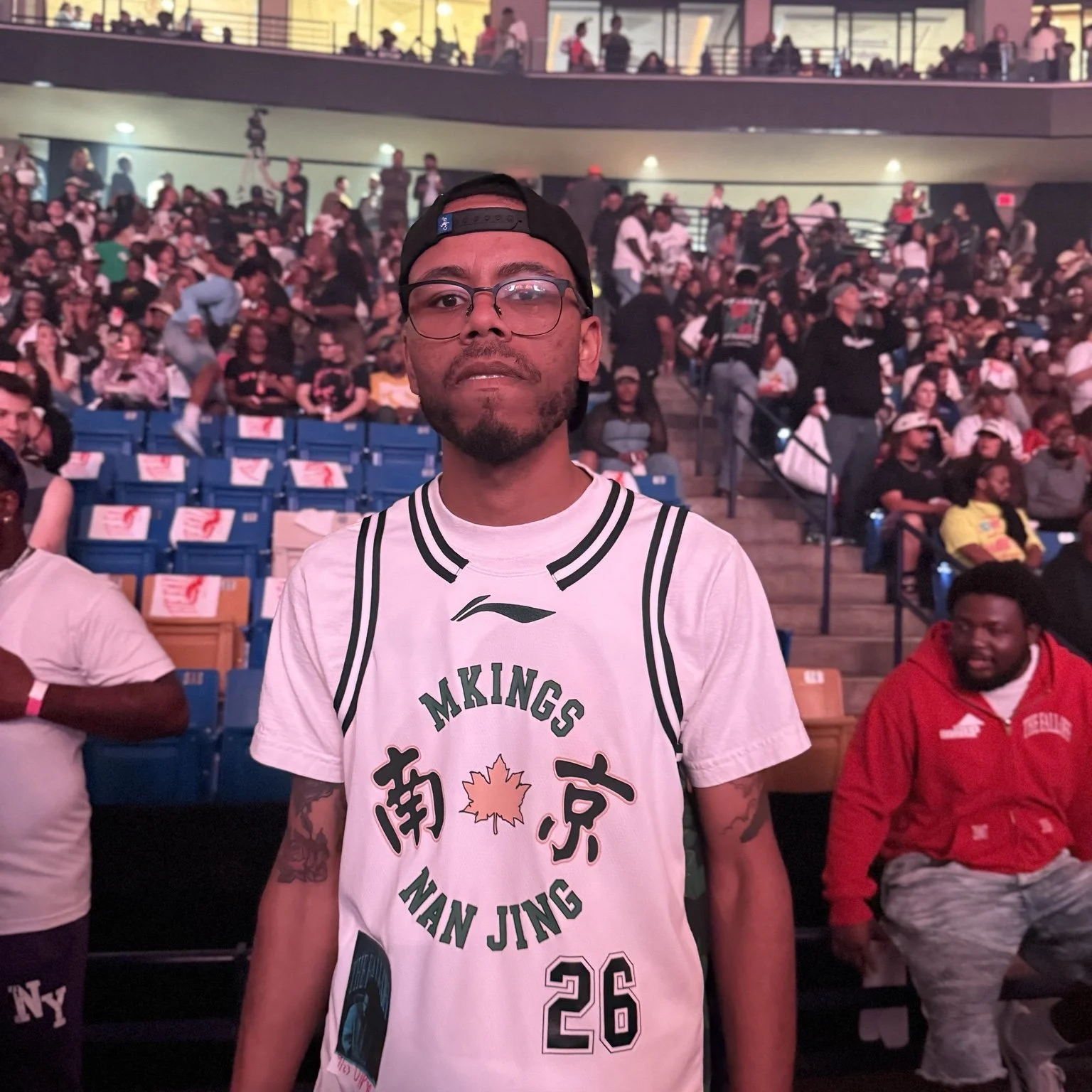
From The Come Up to The Fall-Off
I knew I wanted to write something after seeing The Fall-Off tour. I just didn’t want it to be an album review. This is about Fayetteville, the music I grew up with, and realizing how far I’ve come too.
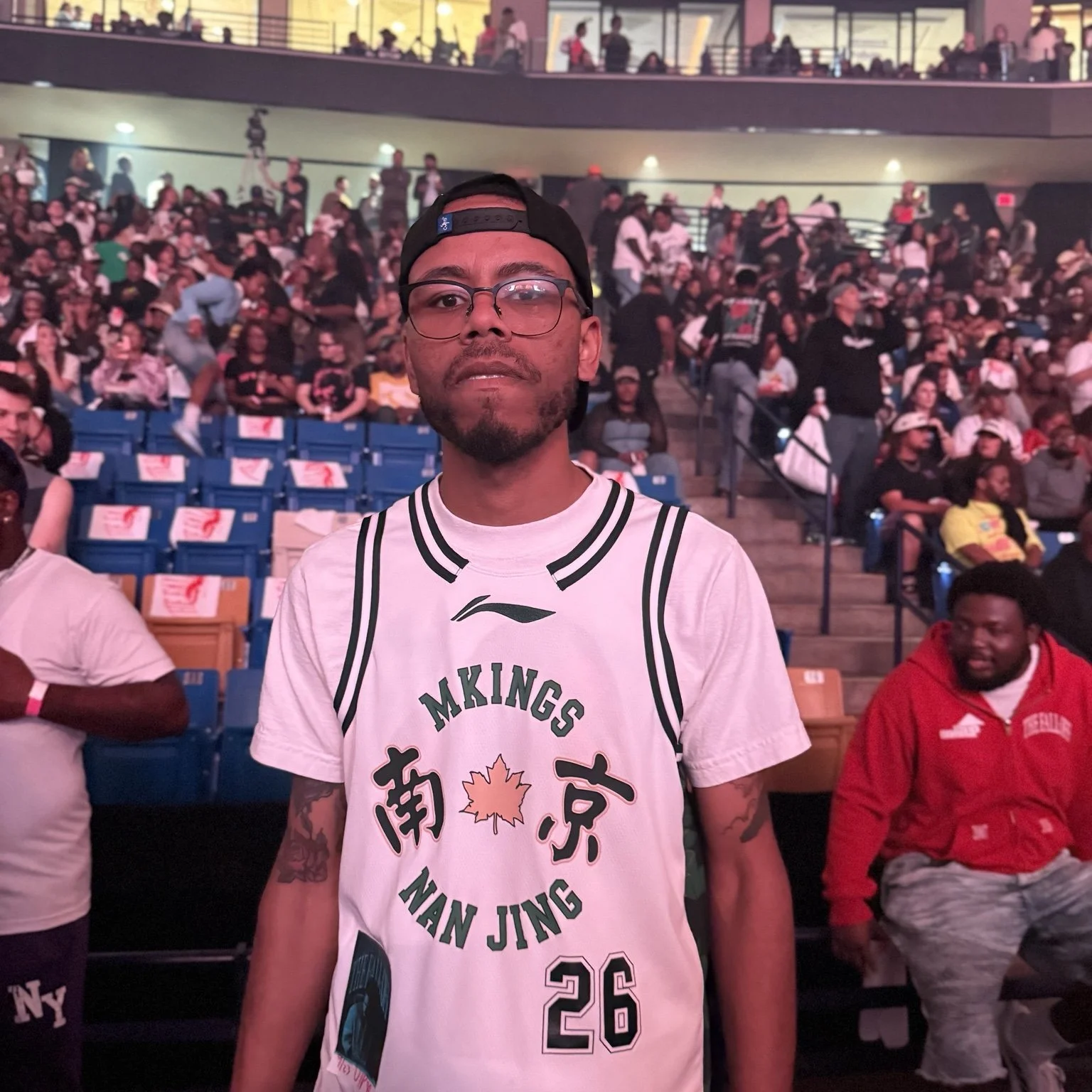
I knew I wanted to write something after seeing The Fall-Off tour. I just didn’t want it to be an album review.
That wouldn’t really explain what this moment means to me.
I’ve listened to Cole for a long time. Long enough that when I hear certain songs, I don’t only hear the music. I remember where I was in my own life. I remember what I was dealing with. I remember who I was trying to become.
That relationship with the music eventually became part of my first book, The Come Up: A Story from the Ville.
And now here I am, years later, standing inside an arena watching The Fall-Off happen in real time.
That hit me differently.
When I wrote The Come Up, I included a letter to Cole. I called it “Dear Jermaine.” One line from that letter has been on my mind lately:
“I’m holding space for The Fall Off, not just as a fan, but as someone who’s learned that the end of one season is the beginning of another.”
At the time, I didn’t know when The Fall-Off would come.
I definitely didn’t know what my own life would look like when it did.
A lot has happened since I wrote those words.
I’ve grown as a husband. I’ve become a father twice over. I’ve had to rethink my career, my purpose, my faith, my mental health and what success actually means to me. I’ve had seasons where I felt like I knew exactly where I was going, and other seasons where I was trying to figure everything out one day at a time.
So when I finally heard The Fall-Off, I wasn’t listening as the same person who first waited for it.
Maybe that’s why this album feels different.
The music was never the whole story
Something I tried to make clear in The Come Up is that my connection to Cole has never been about pretending that I know him personally.
I don’t.
My connection has always been to the music, the story and the place we both call home.
Fayetteville.
Growing up there, seeing somebody from the Ville take an idea that started with a notebook and turn it into something the entire world could hear meant something to me.
It still does.
Cole showed me what was possible with his music.
Eventually, I had to figure out what was possible with my own pen.
That is where The Come Up came from.
Not my come up toward fame.
Not my come up toward money.
My come up toward myself.
Trying to understand the kid I was. The man I became. The things I survived. The things I still carry. The mistakes. The Army. Marriage. Fatherhood. Faith. Mental health. Fayetteville.
All of it.
Writing that book was one of the ways I learned how to put those pieces together.
And Cole’s music happened to be playing through a lot of those chapters.
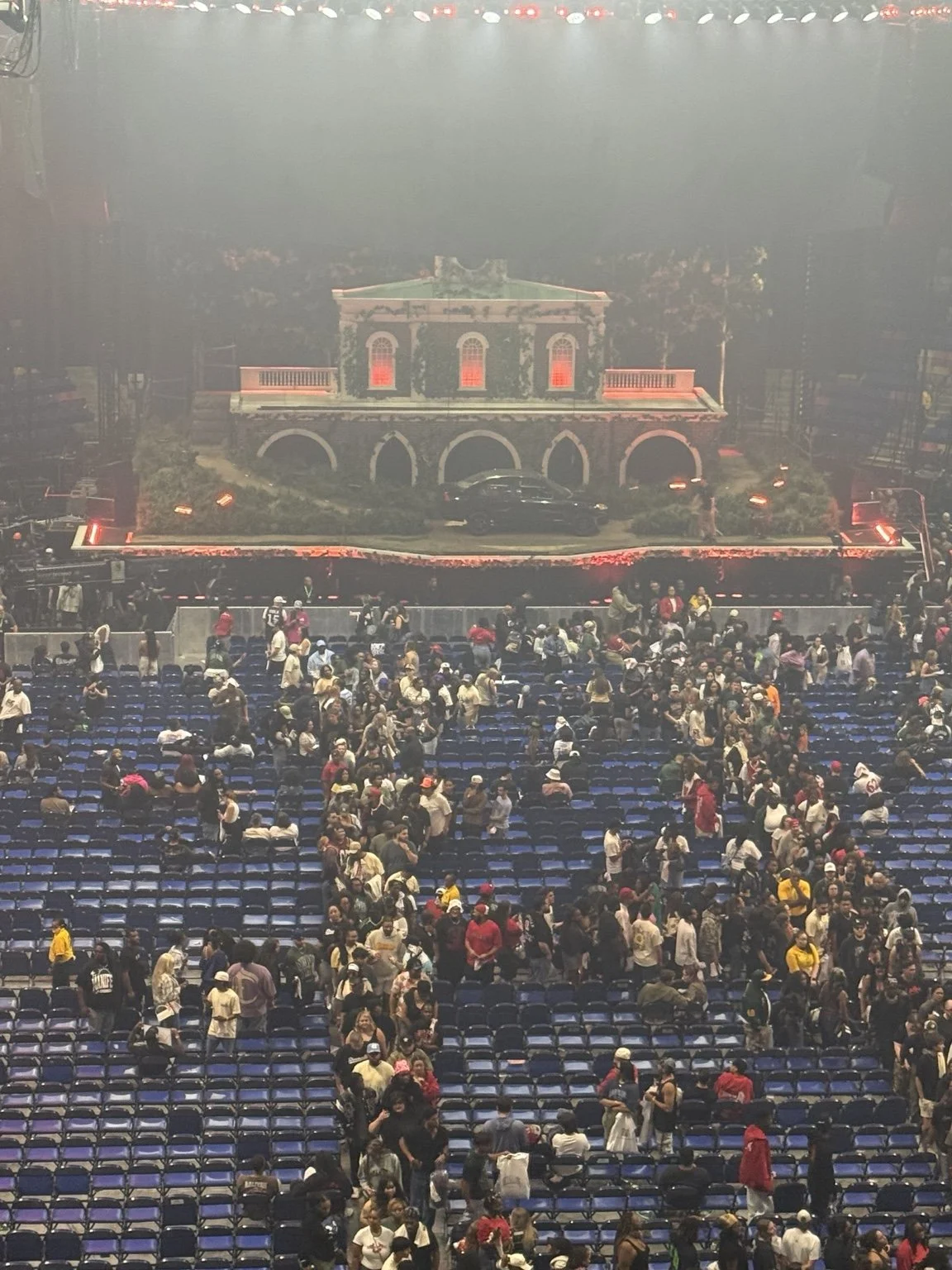
Seeing the Market House onstage, I kept thinking about my second book, The Child Beneath the Market House. It was on my mind throughout the concert.
Then I saw The Fall-Off live
There was a moment at the concert when I looked around and really took everything in.
Thousands of people. The lights. The stage. Everybody reacting to music that started as an idea in somebody’s head.
And there I was in the middle of it. A kid from Fayetteville who grew up listening to another kid from Fayetteville.
Except I’m not that kid anymore.
That’s what got me.
I started thinking about all the versions of myself that had listened to Cole before that night.
The younger me. The soldier. The husband. The father. The man trying to heal. The writer who eventually sat down and wrote The Come Up.
I wish I could explain to some of those earlier versions of myself where we eventually ended up.
I don’t think they would believe me.
And I don’t mean that because my life became perfect. It didn’t.
I mean that I kept going.
Sometimes I forget to give myself credit for that.
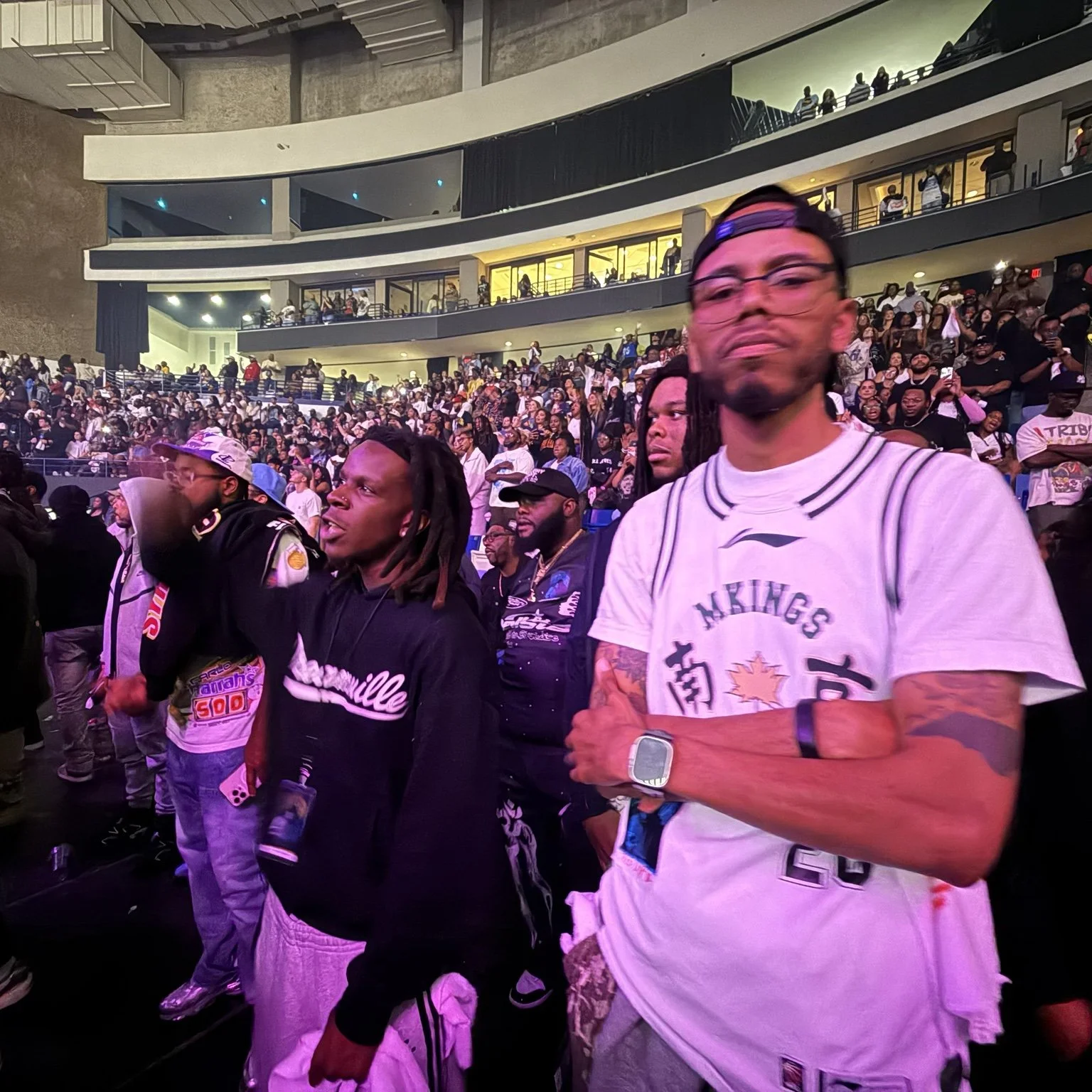
Watching Cole with my cousin Jaheim became a core memory for me.
The Come Up. The Fall-Off.
On paper, they sound like opposites.
Life has taught me they’re closer than that.
Sometimes your come up requires something else to fall off.
An old way of thinking. An old version of yourself. Something you were chasing because you thought you were supposed to.
Sometimes growth isn’t climbing higher. Sometimes it’s finally understanding what you don’t need to carry anymore.
I’m still learning that.
That’s probably why that sentence from my original letter means even more to me today: The end of one season is the beginning of another.
I wrote it before I knew what the next seasons of my own life would bring. Now I’ve lived some of them.
A kid from Fayetteville watching another kid from Fayetteville. Except neither one of us are kids anymore.
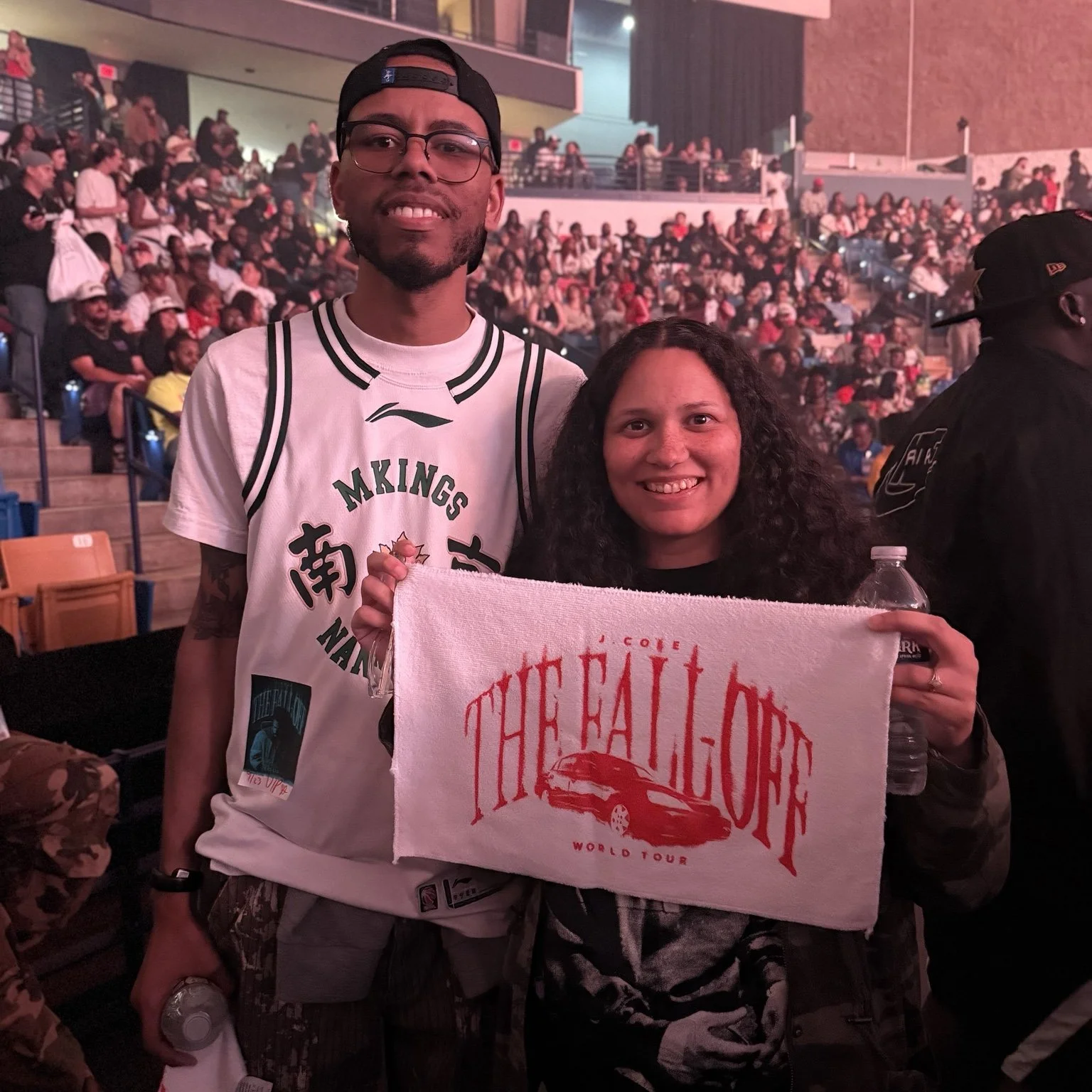
Me and my baby boo
Dear Jermaine, again
So I guess this is another thank-you. Not because the first one expired. Because I meant it.
In my original letter, I wrote:
“Your music has been more than just a soundtrack to my life—it’s been a mirror, a guide, and at times, a lifeline.”
That is still true. I also wrote that your story gave me permission to tell mine.
I understand that sentence better now too.
It wasn’t permission in the sense that I needed somebody to tell me I could write. It was seeing somebody from where I’m from take his story seriously enough to believe other people might care about it.
That made me look at my own story differently.
So thank you, Jermaine. For the music. For continuing to carry Fayetteville with you. For giving people from places like ours proof that their ideas don’t have to stay trapped inside the city limits. And personally, thank you for giving me music that I could grow with.
I wrote The Come Up while I was still becoming. Truth is, I still am. Maybe we all are.
I don’t know what Cole’s next chapter looks like after The Fall-Off. I don’t completely know what mine looks like either.
But standing in that arena, thinking about the book I wrote, the letter I wrote before this album ever arrived, and everything that has happened in my life since then, one thought kept coming back to me:
Damn. I came a long way too.
From the Ville,
DaQuan D. Bethea
Author of The Come Up: A Story from the Ville
The Roots We Leave Behind
God has given me another gift in a son.
When Myles was born, I remember feeling like life had changed overnight. Not because everything suddenly became easier or because I had all the answers, but because I realized somebody was watching me now. Somebody was going to learn from what I did more than what I said.
Now, here I am again.
A father of two sons.
To be honest, it’s a feeling that’s hard to explain. It’s exciting. It’s humbling. It’s a little scary if I’m being real. But more than anything, it’s a blessing.
As I look at Jax and look at Myles, I can’t help but see pieces of myself. Not just in how they look, but in the opportunity God has given me to look in the mirror. Fatherhood has a way of doing that. It forces you to slow down and think about the things that matter. It makes you look at your strengths, your flaws, your habits, and your priorities a little differently.
But this journey isn’t just about me.
It’s about Evelyn and me.
We’ve been growing together since we were kids ourselves, and now we’re raising kids of our own. Every season has brought something new for us to learn, and this season is no different. We don’t have everything figured out. We won’t always get it right. But one thing I know for sure is that we’re going to keep showing up for our boys and for each other.
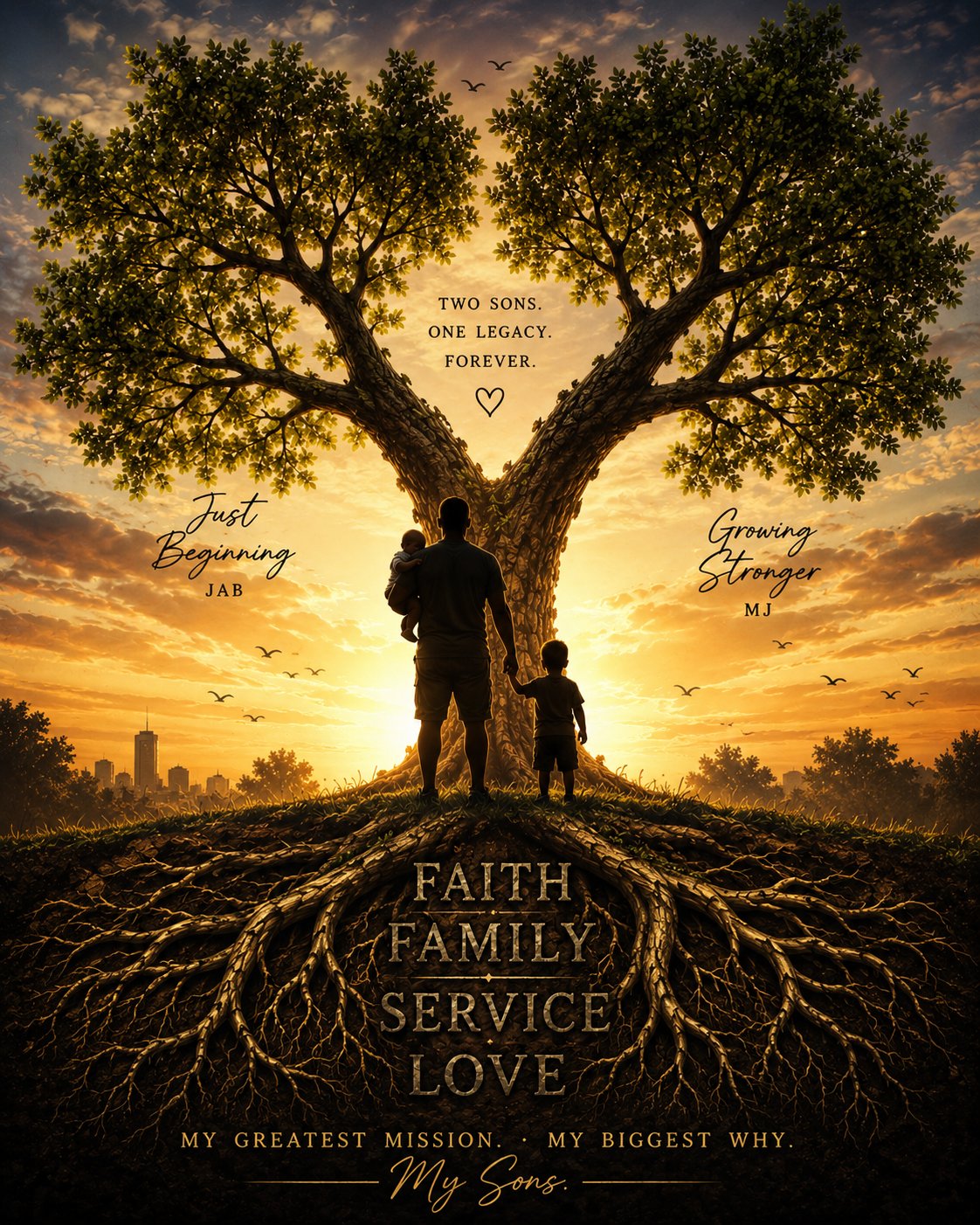
When I look at the tree in the image above, I think about family.
People usually notice the branches first. They notice how tall the tree has grown or how far it stretches. What they don’t always see are the roots underneath. The roots are what hold everything together when the storms come.
That’s what I want for our family.
I want our roots to run deep. Deep in faith. Deep in love. Deep in grace. Deep enough that when life gets hard—and it will—we’re still standing.
I don’t know exactly what being a father of two sons will teach me yet.
I don’t know all the lessons waiting for me down the road.
Maybe those answers won’t come until I’ve traveled a little farther and made my way back to shore a few more times.
But today, I’m grateful.
Grateful for Evelyn.
Grateful for Myles.
Grateful for Jax.
Grateful that God saw fit to trust us with these two young lives.
And grateful for the opportunity to continue growing right alongside them.
— DQ
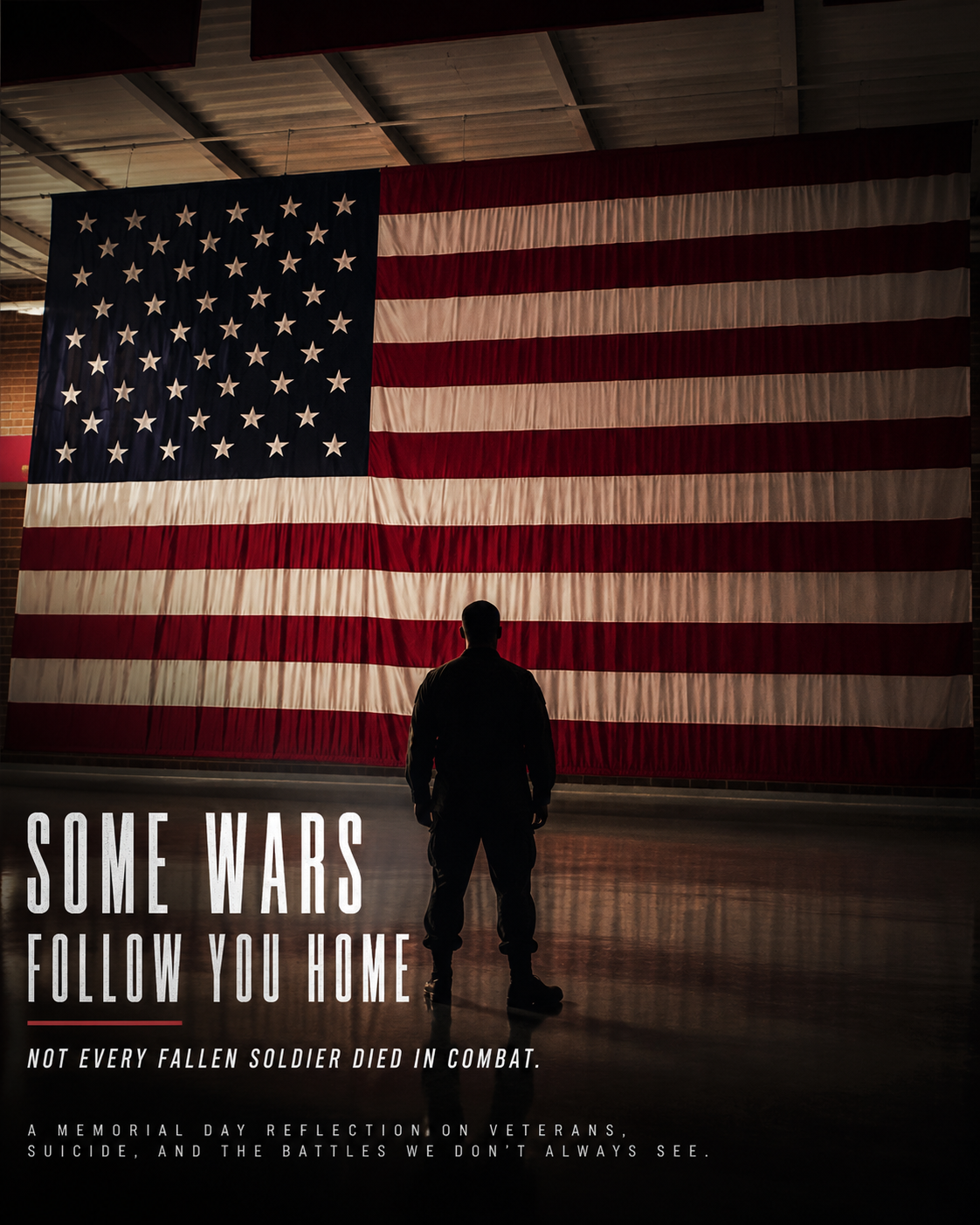
Some Wars Follow You Home
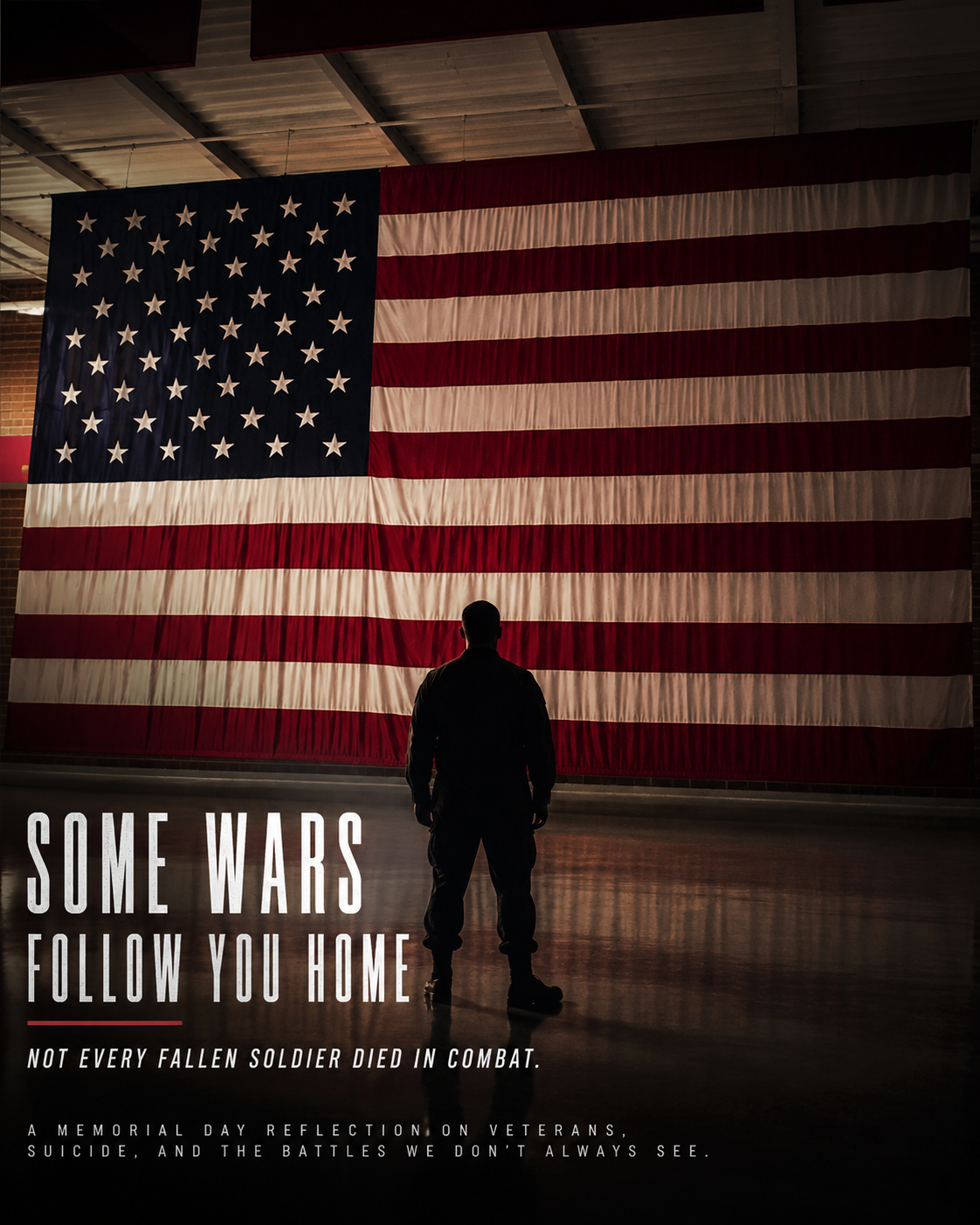
Not every fallen soldier died in combat.
Memorial Day has always carried a certain heaviness for me, but not always for the reasons people might expect. Like many Americans, I grew up understanding the holiday as a time to honor those who died in war. Flags wave across neighborhoods, families gather around grills, old photographs are reposted online, and somewhere beneath all the celebration sits remembrance. At its core, Memorial Day asks us not to forget sacrifice. But the older I get, and the more I reflect on my own experiences serving in the military and working in behavioral health, the more I realize there are some forms of sacrifice our country still struggles to fully acknowledge.
Some service members never stopped fighting after they came home. During my time in the United States Army as a Behavioral Health Technician, I had the opportunity to sit with soldiers during some of the most vulnerable moments of their lives. Many of the conversations I experienced were not dramatic in the way movies often portray military trauma. Most of the time, the pain sounded ordinary. It sounded like exhaustion. Like uncertainty. Like people trying to reconnect with their families after years of emotional distance. It sounded like service members struggling to rediscover purpose after the structure of military life began to fade. Sometimes it sounded like silence itself, because many people had become so accustomed to carrying weight privately that they no longer knew how to explain what they were feeling out loud.
That experience changed the way I view strength. Before serving, I think I understood strength the way many young men do. I associated it with endurance, discipline, toughness, and the ability to push through discomfort without complaint. The military reinforces many of those ideas because, in many ways, it has to. People are trained to function under pressure, to adapt quickly, and to complete the mission regardless of what they may be feeling internally. But what I slowly came to understand is that survival mode does not always disappear once a deployment ends or once someone separates from service. Many veterans return home physically while parts of them remain emotionally attached to the environments they had to survive in. The body may be sitting safely in a living room with family, but the mind is still scanning for danger, still carrying responsibility, still trying to process years of emotional suppression that never had space to breathe.
That reality becomes even more difficult because military culture often rewards composure. A soldier can smile, joke, show up to work, pass physical fitness tests, and still be quietly struggling in ways nobody around them fully sees. Pain does not always announce itself loudly. Sometimes it appears in isolation, in sleepless nights, in emotional distance, in drinking too much, or in the habit of telling everyone “I’m good” simply because it feels easier than explaining otherwise. Over time, many veterans become experts at functioning while hurting, and unfortunately that can make it difficult for others to recognize when someone is truly nearing their limit.
As I reflect on Memorial Day now, I find myself thinking not only about those who died in combat, but also about those who survived war only to later lose their lives to battles that continued internally long after the uniform came off. I think about veterans who spent years trying to reacclimate to civilian life while carrying experiences they never fully unpacked. I think about service members who struggled with the loss of identity that can happen after leaving the military, where purpose, structure, and belonging once shaped daily life. I think about the emotional weight of feeling disconnected from people who may appreciate military service symbolically but cannot truly understand what that transition feels like psychologically.
Most of all, I think about the families and friends left behind.
There is a unique kind of grief that exists within the military and veteran community because the relationships formed through service often carry a depth that is difficult to explain to civilians. People see each other under stress, exhaustion, fear, homesickness, and pressure. They become witnesses to versions of one another that few outsiders ever encounter. Because of that, losing a fellow veteran or service member can create questions that linger for years. People replay conversations in their minds. They wonder whether they missed signs. They question whether one more phone call, one more conversation, or one more moment of honesty could have changed the outcome. That kind of grief can become especially heavy during holidays like Memorial Day because remembrance and loss begin occupying the same emotional space at once.
For veterans mourning another veteran this Memorial Day, I hope there is room to understand that grief does not always follow a clean or understandable path. Sometimes grief shows up as sadness, but other times it appears as guilt, numbness, frustration, emotional distance, or even exhaustion. Sometimes people spend years trying to make sense of losses that never fully make sense. The truth is that many individuals become so skilled at surviving quietly that even those closest to them cannot always see the full depth of what they are carrying internally. That does not mean their lives mattered less, nor does it mean those left behind failed them. It simply means that mental and emotional suffering can become incredibly difficult to recognize when people have spent years learning how to hide it.
That is why I believe conversations surrounding veteran mental health must become more compassionate, more honest, and more human. Mental health awareness cannot simply exist as a slogan repeated during difficult months of the year. It has to become part of how we treat one another consistently. It has to become part of how veterans speak to each other, how families support returning service members, and how communities create spaces where people feel safe enough to be truthful about what they are experiencing internally. Many veterans do not need pity. What they often need is connection, patience, understanding, and reassurance that their value did not end when their military service did.
What makes this conversation even heavier is knowing how widespread this struggle still is. According to the Department of Veterans Affairs’ most recent suicide prevention report, 6,398 veterans died by suicide in 2023, which averages to roughly 17.5 veterans per day. The report also noted that many of the veterans lost were not actively connected to VA healthcare or support systems during the final year of their lives.
The Department of Defense also reported that 471 service members across the Total Force died by suicide in 2024. While that number represented a decrease from the previous year, the long-term reality remains difficult to ignore: military and veteran suicide continues to affect thousands of individuals, families, and communities across this country every single year.
And behind every number is a human being.
A laugh somebody misses.
A voice that no longer answers the phone.
A family trying to understand what happened.
A friend replaying old conversations in their head wondering if there was a moment they should have noticed something differently.
That is why this conversation cannot only exist during awareness months or after tragedy strikes. Veterans do not simply need recognition for their service; many of them need genuine connection, emotional safety, community, and the ability to speak honestly without feeling like they are becoming a burden to the people around them.
Memorial Day should always remain a time to honor sacrifice, but perhaps part of honoring sacrifice also means acknowledging the invisible wounds that many service members continue carrying long after war ends. Not every casualty happened overseas. Some losses occurred quietly years later, inside homes, apartments, parked cars, and moments of silence where people felt unable to carry their pain any further. Those lives deserve remembrance too.
And for any veteran reading this who may be grieving someone they lost, struggling privately themselves, or simply feeling emotionally heavy this Memorial Day, I hope you understand that your life still matters beyond your service. Your worth is not limited to your rank, your deployment history, or the image of strength you feel pressured to maintain. You deserve support while you are still here. You deserve community while you are still here. And you deserve to be seen as a human being before you ever become another name people remember after it is too late.
If you or someone you know is struggling, the Veterans Crisis Line is available 24 hours a day, 7 days a week. Veterans, service members, and their loved ones can call or text 988 and press 1, or chat online through the Veterans Crisis Line. You do not need to be enrolled in VA benefits or healthcare to reach out for help. veteranscrisisline.net
ait, 2018.
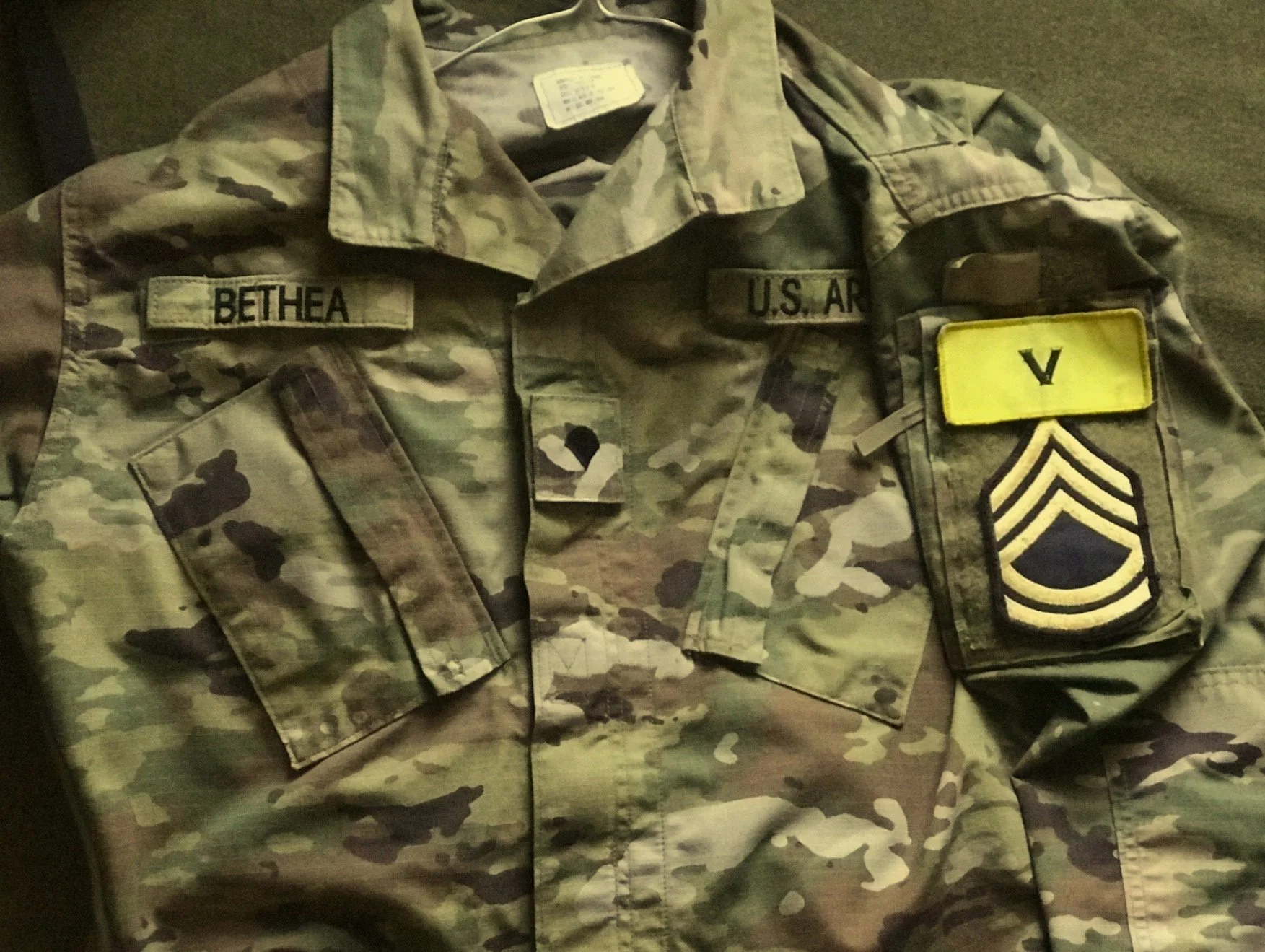
Some moments don’t make sense until years later.
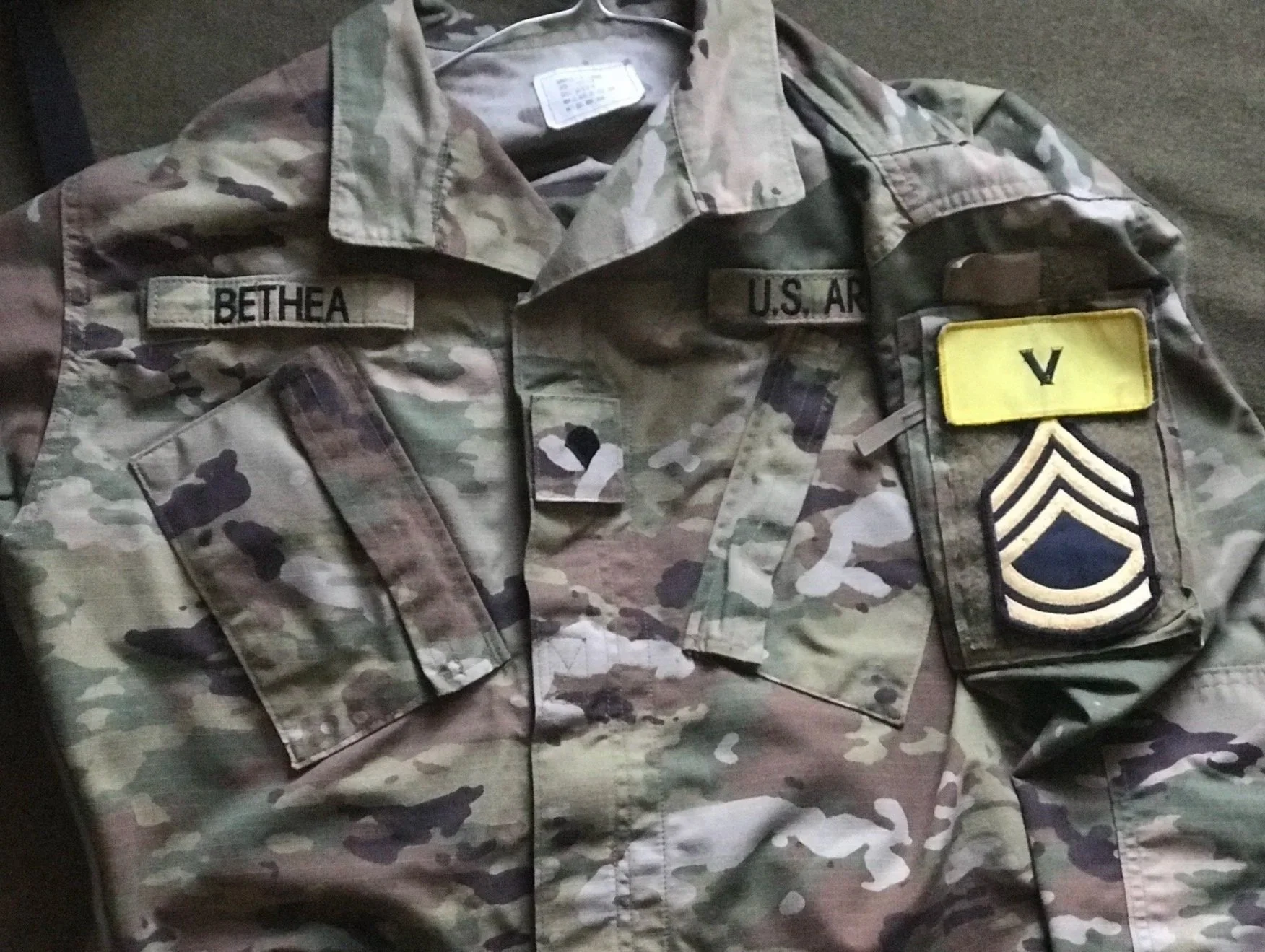
Back when i was in AIT at Fort Sam Houston, i was doing everything right. i took pride in that. i moved how a soldier is supposed to move. i listened. i learned. i earned my spot. At one point, i was even given the responsibility to lead my platoon. That meant something to me. It wasn’t just rank—it was trust.
One weekend, we had pass. Nothing crazy. Just a chance to breathe outside the structure for a minute. me and my battle buddies were out, dressed down, just being regular people again. One of my friends had music playing from his phone. Hip-hop. The kind of music we grew up on. The kind of music that tells stories we already understand without needing explanation.
Out of nowhere, a general officer runs up on us.
Not a sergeant. Not a lieutenant. A general.
At the time, i didn’t fully process it. i just saw rank, saw authority, and snapped into soldier mode. But what followed never really sat right with me. He asked why we were listening to music with the word “nigga” in it. Then he asked if it was okay for him to say it. Just like that. No context. No bridge. Just dropped it in the air and let it sit there between us.
And in that moment, i didn’t respond. None of us did.
Not because we didn’t have thoughts. Not because we didn’t feel something shift. But because in that uniform, in that position, there are moments where your voice doesn’t feel like it belongs to you anymore.
We were told to go back, change into our dress uniforms, and report to his office.
On a Sunday.
That alone told me this wasn’t small.
By the time we got there, it wasn’t just him. It was our entire chain of command. People who were probably supposed to be with their families now standing in formation because of something that started with music playing from a phone.
We got marched there. About a mile. Silent. Minimal cadence.
When we walked into his office, i remember the details more than the message. Burgundy carpet everywhere. Clean. Quiet. Controlled. It felt like walking into a space where everything had purpose… except what was about to happen next.
He played a video of a black woman being attacked by a dog during a civil rights march.
Then he asked us if we knew who she was. We didn’t.
He said she was someone who “couldn’t use her words,” and that’s why she got bit.
i remember standing there thinking… what does this have to do with us?
As tears hit the floor, i knew i would never get that answer.
Even now, years later, i’m still asking that question.
Because it wasn’t explained. It wasn’t connected. It wasn’t a conversation. It was a moment where something was being projected onto us, and we were expected to receive it without clarity.
After that, things changed for me.
The role i had earned was taken. Privileges gone. Pass revoked. The city we were just out enjoying—closed off to us completely.
And just like that, something shifted.
Not in my discipline. Not in my performance.
But in my understanding.
That moment taught me something i didn’t have the words for back then. It showed me how quickly power can move without explanation. How easily a situation can escalate when authority decides it needs to. And how, sometimes, the lesson being taught isn’t the one that’s actually received.
i’ve thought about that day more times than i can count. Not because i’m holding onto anger—but because i’ve been trying to make sense of it.
As a soldier, i understood structure. i understood correction. i understood discipline.
But i didn’t understand that moment.
And maybe that’s the truth of it.
Not every experience is meant to be wrapped up clean. Some moments stay with you because they were never fully explained in the first place.
But what i do know now is this:
i didn’t lose anything that day.
If anything, i gained awareness.
Awareness of how important it is to communicate clearly.
Awareness of how culture and context matter.
Awareness of how leadership isn’t just about authority—it’s about understanding the people in front of you.
And most importantly, awareness of my own voice.
Because even though i didn’t use it then… i can use it now.
And maybe that’s what this is really about.
Make it stand out
Whatever it is, the way you tell your story online can make all the difference.